
Frequently Asked Questions
The Fiberglass Pool Installation Process
Wondering how your dream fiberglass pool comes to life? Here’s a quick look at the typical
process from vision to backyard oasis:
1. Initial Consultation & Site Visit
First, you’ll meet with our team to chat about your ideal pool shape, size, features,
and location. We’ll review your property, discuss design ideas, and answer your
questions, ensuring you feel comfortable from the very beginning.
2. Design & Planning
Next, we help you select from high-quality fiberglass pool lines such as AVIVA
Pools or Latham Pools. Our experts use your feedback to fine-tune the layout,
features, and finishes, making sure it fits seamlessly with your backyard and style.
3. Permitting & Preparation
Once you’re thrilled with the plan, we handle all necessary permits and get your site
prepped and ready for installation. This step includes marking out the space and
taking care of underground utilities.
4. Excavation & Pool Shell Delivery
We’ll carefully excavate your backyard and coordinate the delivery of your chosen
fiberglass pool shell—professionally craned or positioned into place. Our installers
meticulously check for a perfect fit.
5. Plumbing, Backfill & Equipment Setup
With the shell set, we handle all plumbing, electrical work, and install your pool equipment. We use premium materials and top brands throughout, so you’ll enjoy
reliable, long-term performance.
6. Backyard Restoration & Finishing Touches
After everything is connected, we backfill around your pool, restore the surrounding
area, and add finishing details like decking and landscaping. Soon, your new pool is
sparkling and ready to enjoy!
Throughout each stage, our goal is to make the process smooth and stress- free, keeping you informed so you know exactly what to expect. Ready to start designing your perfect fiberglass pool? Let’s make it happen!
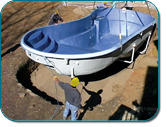 1) The pool layout is carefully marked for precision.
2) The dig begins the process for perfection.
3) The hole is carefully prepared to achieve the proper shape and depth.
4) The pool is set in place.
5) The pool is now filled with water and the backfill process begins.
6) The proper plumbing and electrical equipment is installed.
7) The concrete is poured around the pool.
8) Your lifetime guaranteed fiberglass pool is ready for years of enjoyment.
Information for Selecting Your Swimming Pool Builder
- Never hire anyone who comes to your door unsolicited, seeking business.
- Talk to a minimum of three contractors about your project. Look for firms that have been in the pool and spa or building industry for at least five years.
- Never allow a builder to rush you into signing a contract, and never sign a contract that you don’t understand. Don’t be embarrassed to take a few days to study a document before you sign it. And ask questions, questions and more questions.
- Always make sure that a contractor is insured and licensed. Ask to see insurance certificates for both general liability and workers compensation, and a license in the name of the individual building your pool or spa.
- Have a prepared pool/spa plan and a materials list drawn up and take bids on each.
- Always check credentials and talk to references, especially the firms’ three most recent clients.
Things to Consider in Choosing Your Pool Builder Include:
- Did the builder start and finish on time?
- Were there any surprises during the job – such as a change in the price?
- Was it easy to get in touch with the contractor while the construction was in progress? Would you hire this contractor again?
- Does the contractor have a place to view pools and all the equipment they sell?
- Remember that the lowest bid is not always the best. Take a critical look at all bids, estimates and offers – and make sure to get them in writing.
- Contact the firm’s primary material supplier to ask if the contractor pays bills on time and whether the supplier would recommend the firm.
- Never pay more than ten percent of the estimate as a down payment. Plan to pay the remaining amount in installments linked to specific phases of the project.
- Never pay a contractor in cash. Use cashiers checks or money orders and get a receipt.
- Always check past and prior financial status of a potential contractor. Many pool builders are here one day and gone the next.
- Never make your final payment until you completely understand how your pool/spa and related equipment operate.
Remember, the more time you spend planning your pool/spa project and checking out the credentials of your contractor, the less time you will spend complaining later.
The right pool depends on your yard, how you plan to use the space, and the style you prefer. AquaPools offers a wide range of sizes - from compact plunge pools to large family-sized designs; and shapes such as rectangular, freeform, and classic styles. To make it easy, we connect you with a dedicated backyard pool design specialist who will guide you through options, measure your space, and help you choose the perfect fit for your home.
After the construction of the pool is completed, a rough lot grade is completed. Then the customer is ready for sod and landscaping.
Yes, we train our customers how to own and maintain their fiberglass swimming pool. The class which we call Pool School is completed at the end of the project.
If there are existing sprinklers where the pool, plumbing, access, or flatwork is going, there is potential for sprinklers to be damaged. We recommend having the sprinklers re-routed after the pool construction is completed.
Freeze & Storm Protection for Your Fiberglass Swimming Pool
4 STEPS TO MAINTAINING YOUR POOL IN A POWER OUTAGE
Turn off your breaker.
While you may not have power now, the first thing you should do is turn off all breakers to your pool so that when the power does return, you can assess your pool in a controlled environment before everything turns back on and causes potential havoc.
Remove lids.
Freezing water expands and it needs a place to go. To avoid cracking and damaging lids, we recommend removing pump pot and filter lids to avoid extra built-up pressure and provide extra space for any ice to go.
Open all valves.
Similar to removing lids, opening as many valves as you can, including the air relief valve on top of your filter, relieves pressure on the water that may be expanding within your equipment.
Remove all plugs.
Many of your plugs can also be removed to account for expanding water. Remove the pump pot plug, pump volute plug, cartridge or sand filter drain plugs, the drain plugs next to the heater and the plug found at your dial valve. While most frozen plugs can be removed by hand, if needed, use a pair of pliers for extra leverage.
3 STEPS TO MAINTAIN YOUR POOL DURING FREEZING WEATHER
Keep your equipment on.
In general, moving water is less likely to freeze, that’s why it is essential to keep equipment running and pool pumps circulating even during freezing temperatures.
Check your pool pump, pipes and lines.
Do you notice any damage or cracks? If so, turn off your pool to avoid further damage. Do note that cracks in frozen pipes and lines won’t leak until they start to thaw.
Assess the surface of your water.
The surface of your pool’s water could freeze. As the water freezes, it expands and can start pushing against the skimmer and tiles of your pool causing them to potentially chip, break or fall off completely. It is important to keep water flowing as long as possible to avoid potential damage caused by ice.
Raised Fiberglass Spa vs. Built-In Fiberglass Spa — Which Is Right for My Backyard?
Choosing between a raised spa and a built-in spa depends on your space, budget, and how you plan to use it. Both options deliver relaxation, hydrotherapy benefits, and year-round enjoyment — the right choice comes down to design preference and lifestyle.
What is a Raised Spa?
A raised spa is a standalone or elevated spa that sits above ground level and can be installed on a patio, deck, or integrated beside a pool. Raised spas include built-in jets, heaters, and pumps, and come in multiple shapes and seating configurations.
Common Features of Raised Spas
- Infinity or spillover edges
- Internal or external steps
- Submerged benches
- Ergonomic seating or reclining positions
- Bubblers and multiple jet options
Benefits of a Raised Spa
- Adaptable Design: Works well in smaller or uniquely shaped backyards where a full pool may not fit.
- Faster Installation: Typically requires less construction and can often be completed more quickly.
- Cost-Effective: Generally lower upfront investment compared to full pool-spa combinations.
- Versatile Sizes & Shapes: Available in circular, square, or half-moon designs to match different outdoor layouts.
- Optional Pool Integration: Can be added next to a pool with a spillover feature for visual appeal and soothing water sounds.
What is a Built-In Spa?
A built-in spa is integrated into the in-ground fiberglass pool shell, creating a seamless pool-and-spa combination. These are commonly designed as part of the original pool installation and offer a cohesive, high-end aesthetic.
Benefits of a Built-In Spa
- Seamless Look: Blends naturally with the pool and landscape for a luxury backyard design.
- Customization Options: Flexible sizing, shapes, finishes, jet placement, and lighting features.
- Durability: Constructed with high-quality composite fiberglass materials designed for long-term strength and beauty.
- Enhanced Features: Can include waterfalls, custom lighting, benches, and splash pads.
- Increased Property Value: A well-designed pool and spa combo can significantly enhance resale appeal.
How Do I Choose Between a Raised Spa and a Built-In Spa?
Ask yourself the following:
What is my budget?
- A raised spa is typically the more affordable, lower-commitment option.
- A built-in spa is a larger investment but offers long-term visual and property value benefits.
How much backyard space do I have?
- Smaller or challenging layouts often benefit from a raised spa.
- Larger yards with planned pool installations are ideal for built-in spas.
What is my main goal?
- Both options provide relaxation, hydrotherapy, and year-round use.
- Built-in spas emphasize cohesive design and luxury.
- Raised spas emphasize flexibility and faster installation.
No. A raised spa can function completely on its own without a pool. Built-in spas are designed as part of the fiberglass pool & spa combo shell.
Will a Spa Increase My Home Value?
Yes. Both spa types add lifestyle value, but built-in spas paired with pools often provide a stronger resale impact due to their integrated design and luxury appeal.
Who Can Help Me Decide on the Right Fiberglass Spa?
Our AquaPools Backyard Designers work with you to evaluate space, budget, and goals to recommend the best spa solution. Whether you prefer a sleek raised spa or a fully integrated pool-and-spa design, we guide you from concept through construction.
Ready to design your spa? Contact AquaPools to schedule a consultation and start planning your backyard retreat.
Call 1-800-432-8994 to speak to a specialist or request your free quote to have a representative provide details, options and special incentives available for your dream pool.
AquaPools on Social
Stay in touch with what is going on